Your Product Doesn't Need to Be Perfect
Perfectionism kills more businesses than failure ever will.
You've been working on your product for months. Maybe years. It's good. Really good. But there's always one more thing to improve before you launch.
The grip could be more ergonomic. The color could be better. The packaging could look more professional. The website copy could be tighter.
So you wait. And while you wait, someone else launches something similar. It's not as good as yours. But it's out there. And you're still perfecting.
Let me tell you something that might hurt to hear: your product will never be perfect. And that's completely fine.
Good Enough Is a Strategy
"Good enough" sounds like settling. It sounds lazy or unprofessional.
It's not. It's smart business strategy.
Good enough means your product works. It solves the problem you said it would solve. It won't break. It won't disappoint customers on the core promise.
That's all you need for version 1.
Everything else—premium packaging, fancy features, perfect aesthetics—those can come in version 2, 3, and 4.
What Perfect Actually Costs
Let's talk about the real cost of trying to be perfect before launch.
Time Cost: Every month you spend perfecting is a month you're not selling, not learning from real customers, not building a business.
Money Cost: You're spending more refining details when you could be using that money to test the market.
Opportunity Cost: Markets move. Competitors launch. Timing matters. Perfect always means later.
Learning Cost: You learn nothing from perfection in your garage. You learn everything from imperfection in the market.
The cost of "perfect" is usually way higher than the cost of "good enough now, better later."
Version 1.0 Is Supposed to Be Rough
Look at the first version of almost any successful product. It's rough compared to what came later.
The first iPhone didn't have apps, copy-paste, or 3G. The first Amazon only sold books. The first Facebook was just for college students.
They launched incomplete. They learned. They improved.
Your product should follow the same path.
What Actually Matters at Launch
Only three things truly matter for your first launch:
1. Does It Work? Does your product actually do what you say it does? Does it solve the problem? Is it safe and functional?
If yes, you're ready. Everything else is nice to have.
2. Can People Buy It? Is there a simple, clear way for someone to give you money and receive your product?
If yes, you're ready. The checkout process doesn't need to be elaborate.
3. Can You Fulfill Orders? If someone orders, can you actually get the product to them in a reasonable timeframe?
If yes, you're ready. Scaling fulfillment can come later.
That's it. Three things. Not thirty.
What Can Wait
Here's what doesn't need to be perfect at launch:
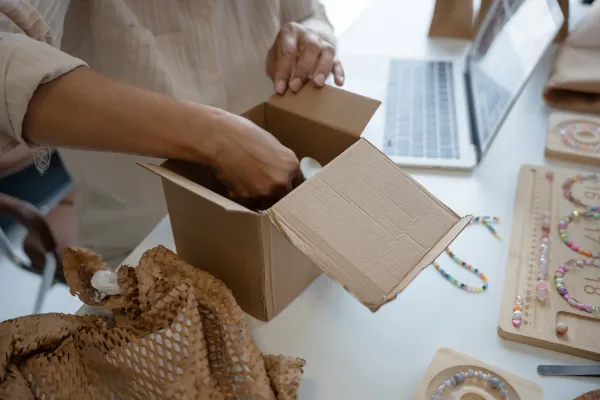
Packaging - Simple, protective packaging works fine. Premium boxes can come later.
Website - A basic, functional site beats an elaborate site that launches six months from now.
Product Photos - Good iPhone photos beat professional studio shots you haven't scheduled yet.
Feature Set - Core features that work beat comprehensive features that don't exist yet.
Marketing Materials - Basic descriptions beat perfect copy you're still wordsmithing.
Branding - A decent logo beats the perfect logo you're still revising.
All of these can and should improve over time. None of them need to be perfect day one.
The 80/20 Rule
Your product probably delivers 80% of its value with 20% of the features or polish.
That 80% is what you launch with.
The remaining 20% of value requires 80% more work. You can add that later, based on what customers actually tell you matters.
Launch the 80%. Learn from it. Then decide if that last 20% is even worth pursuing.
Real Customer Feedback Beats Internal Perfection
You can workshop your product internally forever. You'll never know what actually matters until real customers use it.
They'll tell you:
Features you thought were essential that they don't care about
Features you thought were minor that they love
Problems you never anticipated
Uses you never imagined
Improvements you never considered
This information is gold. And you can only get it by launching.
Every day you wait to get real customer feedback is a day you're making decisions based on guesses instead of data.
The Feedback Loop
Here's how successful product businesses actually work:
Launch version 1.0 → Get customer feedback → Improve to version 1.1 → More feedback → Version 1.2 → And so on.
Each iteration gets better because it's informed by real usage, not theoretical perfection.
This is faster and more effective than trying to anticipate everything before launch.
When Perfect Actually Matters
Don't hear what I'm not saying. Some things do need to be right from the start.
Safety - If your product could hurt someone, that needs to be perfect. No compromise.
Core Functionality - If it doesn't work, don't launch it. But "doesn't have every feature" is different from "doesn't work."
Basic Quality - It should feel legitimate and professional, not like a scam or toy. But legitimate doesn't mean luxury.
Promises Kept - Whatever you say your product does, it needs to actually do. Don't overpromise to overcome your insecurity about imperfection.
Get those things right. Everything else can evolve.
The Confidence Problem
Often perfectionism isn't really about the product. It's about you.
You're scared people will judge you if it's not perfect. You're scared they'll think you're amateur or not good enough.
Here's the truth: people judge you way less than you think. Most people are too busy thinking about their own stuff.
And the ones who do judge? They're usually not your customers anyway.
Your customers care about one thing: does this solve my problem? If yes, they're happy. They don't need it to be perfect.
The Early Adopter Advantage
Your first customers will be forgiving. They're early adopters. They're trying something new because they want to solve a problem.
They expect version 1.0 to be a bit rough. Many of them will actively enjoy being part of the journey.
They'll give you feedback gladly. They'll stick with you through improvements. They'll become advocates.
But only if you launch and give them the chance.
Minimum Viable Product (MVP)
This concept gets talked about a lot. Here's what it actually means:
What's the minimum version of your product that delivers value?
Not the minimum you can get away with. The minimum that actually solves the core problem.
That's your MVP. That's what you launch.
Then you make it better based on what customers tell you they need.
The Improvement Timeline
Launch your MVP. Give yourself 90 days before major changes.
Use that time to:
Get products into customer hands
Collect feedback systematically
Identify patterns in what people say
Test small improvements
Learn what actually matters
After 90 days, you'll know way more than you know now. Make big improvements then, based on real data.
Permission to Launch
You're waiting for someone to tell you it's okay to launch something imperfect.
Here it is: Launch it.
Your imperfect version 1.0 is better than your imaginary perfect version that never ships.
Your rough prototype that people can actually buy beats your perfect concept that exists only in your mind.
Your learning from real customers beats your guessing in isolation.
The Competitors Aren't Perfect Either
Look at your competitors' products. Really look at them.
They've got flaws. Missing features. Things that could be better. And they're selling anyway.
Because perfect isn't required. Good enough works.
Your product doesn't need to be better than perfect. It needs to be better than the alternatives. That's a way lower bar.
Done Is Better Than Perfect
This isn't just a motivational saying. It's a business principle.
A product in the market is learning, earning, and improving. A product in your garage is none of those things.
You can perfect it later. You can't un-waste the time you spent perfecting it before launch.
The Six-Month Test
Imagine it's six months from now. You have two possible scenarios:
Scenario A: You launched three months ago. Your product is on version 1.3. You've made 50 sales. You've learned what customers actually want. You're profitable and improving.
Scenario B: You're still perfecting version 1.0. It's really good now. But you haven't sold anything. You haven't learned anything. You're still preparing.
Which scenario do you want to be living?
Your Next Step
Stop working on your product for a week. Seriously.
Instead, spend that week preparing to launch what you have right now:
Set up a basic way for people to buy
Create simple product photos
Write straightforward descriptions
Identify 10 people to reach out to
Then launch to those 10 people. See what happens.
You'll learn more from that than another month of perfecting.
The Bottom Line
Your product doesn't need to be perfect. It needs to be launched.
Perfect is the enemy of done. And done is what builds businesses.
Ship version 1.0. Learn from it. Make version 1.1. Keep going.
That's how every successful product got better. Not by being perfect from day one, but by improving based on real feedback.
Your imperfect product in customers' hands beats your perfect product in your head.


